About Chiropractic
Understanding the science and art of natural healthcare
What Is Chiropractic?
Chiropractic is a major branch of the healthcare sciences and is the third largest primary healthcare profession in the Western world, following conventional medicine and dentistry. Today, there are approximately 60,000 Doctors of Chiropractic worldwide, with around 3,500 practising in the United Kingdom.
According to the United Chiropractic Association's adapted definition, "Chiropractic is a primary health care discipline which emphasises the inherent recuperative power of the body to heal itself without the use of drugs or surgery."
This reflects a core principle of chiropractic: the body is designed to heal, and chiropractic care supports that natural ability.
A Focus on Structure, Function and Health
Chiropractic is built on the understanding that the structure of the body, particularly the spine, directly influences function, which is coordinated by the nervous system. When this relationship is functioning properly, the body is better able to maintain and restore health.
Doctors of Chiropractic also recognise the importance of working collaboratively with other healthcare professionals whenever it is in the patient's best interests. The United Chiropractic Association advocates for a profession grounded in strong evidence, responsible clinical practice and high standards of patient evaluation and care.
The Nervous System: The Foundation of Chiropractic
A fundamental concept in chiropractic is that the nervous system controls every organ, tissue and cell in the body. When nerve pathways become disrupted due to structural or functional problems in the spine, the resulting compromise of neural integrity may affect organ function, mobility and overall health.
Research from both within and outside the chiropractic profession continues to support this connection.
Understanding Vertebral Subluxation / Biomechanical Lesion
Chiropractic is often misunderstood, and much of this relates to terminology. Historically, chiropractors used the term vertebral subluxation to describe reduced motion or misalignment of a vertebra affecting nerve function. Everyday incidents such as slips, falls or repetitive strain can contribute to this loss of normal spinal movement.
The term vertebral subluxation has been recognised by the World Health Organization (WHO) since 1992. It is evaluated, diagnosed and managed using chiropractic procedures supported by rational and empirical evidence. The World Federation of Chiropractors (WFC) reaffirms its use in their policy statement.
However, in May 2010, the General Chiropractic Council (GCC) in the UK advised chiropractors to avoid using the term due to claims of limited supporting research. Instead, they recommend the term biomechanical lesion.
Despite this, the historical chiropractic understanding remains the same: misalignments can result in altered nerve function, potentially leading to symptoms such as tingling, numbness, pain or even no symptoms at all. Over time, this may influence the muscles, vertebrae, soft tissues and contribute to degenerative changes.
Routine Chiropractic Care
Just as dentistry promotes regular check-ups to prevent cavities, chiropractic care encourages periodic spinal assessments to detect biomechanical issues before they develop into more serious problems. Chiropractors are uniquely trained to identify and correct these issues through safe, gentle and specific adjustments.
Every day, over two million chiropractic adjustments are delivered worldwide. These adjustments have an excellent safety record and are considered far safer than muscle relaxants, back surgery or even a single aspirin. People under regular chiropractic care often experience improved wellbeing and require fewer medications, hospital visits and medical interventions.
Spinal Degeneration
Subluxation
A subluxation is a complex mix of functional, structural or pathological changes within a spinal joint that can compromise nerve integrity and influence organ function and overall health. When a subluxation develops, it disrupts normal nerve communication in the part of the body supplied by those nerves, gradually affecting both structure and function.
If left uncorrected, these changes worsen over time, leading to a process known as subluxation degeneration. By assessing the type and extent of these changes, it is often possible to estimate how long a subluxation has been present, which helps determine the level of care required to correct or manage it.
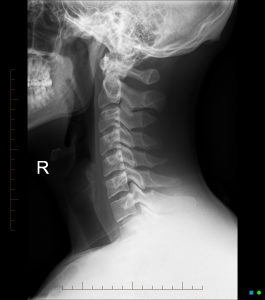
Near Normal Spine
This side-view X-ray shows what we call a "near normal" cervical spine. The patient is facing to the right, allowing us to view the natural forward curve of the neck, which acts as a shock absorber. The disc spaces between C2 and C7 appear thick and even, and the vertebral bodies have clean, square shapes with well-defined borders — all indicators of a healthy spine.
When subluxations occur and remain uncorrected, predictable patterns of degeneration begin. These changes affect spinal structure, nerve function and overall health, gradually progressing into more advanced phases.
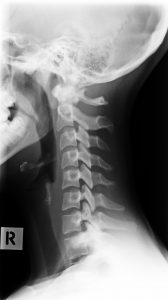
Phase One Subluxation Degeneration
Phase One typically represents subluxations present for up to 20 years. In this early stage, the normal curve of the neck begins to change or flatten, and in some cases may even reverse completely. Disc spaces may start to show subtle changes, although the vertebral bodies still maintain clear borders.
Segmental motion may be affected, but general movement is often still relatively normal. More than 80% of people in Phase One experience no pain, meaning it can progress silently. If left untreated, Phase One will continue advancing.
Chiropractic reconstructive care for Phase One usually ranges from 6 to 18 months.
Phase Two Subluxation Degeneration
Phase Two is generally associated with subluxations that have existed for 20 to 40 years. Many characteristics from Phase One are still present, including abnormal curvature and altered motion. However, new changes begin to appear:
- Reduced range of motion
- Noticeable narrowing or flattening of disc spaces
- Calcium deposits or bone spurs forming around the affected joints
Although some patients may begin to feel stiff or achy, many still report few or no symptoms.
Chiropractic reconstructive care for Phase Two typically ranges from 1.5 to 2.5 years.
If left uncorrected, this degeneration progresses into the next phase.
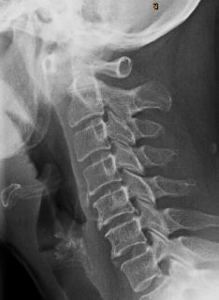
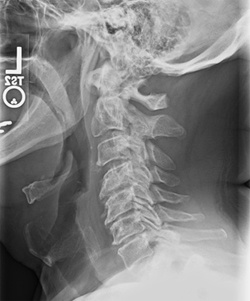
Phase Three Subluxation Degeneration
Phase Three degeneration develops when subluxations persist for 40 to 65 years. All findings from the previous stages now become more severe:
- Significant loss of normal spinal curvature
- Severely altered or collapsed disc spaces
- Extensive calcium deposits or bony overgrowths ("spurs" or "lipping")
- Marked reduction in movement
- Changes in the shape and integrity of the vertebrae
Most individuals in Phase Three experience symptoms, stiffness, or functional limitations.
Chiropractic reconstructive care in Phase Three often ranges from 2.5 to 3.5 years.
Although calcium deposits may remain, improvements in function and mobility are still common — the goal becomes restoring as much quality of movement and life as possible.
Phase Four Subluxation Degeneration
Phase Four occurs when subluxations have been present for over 65 years. This is a severe stage of spinal degeneration and often affects both longevity and quality of life. X-rays typically show:
- Extreme structural deformation
- Massive calcium buildup
- Virtually absent or blurred disc spaces
- Areas of the spine that appear fused
Patients in this stage usually have very limited mobility and may experience multiple related health challenges.
Although complete reconstruction may not be possible, chiropractic care can still aim to reduce subluxation where possible, improve comfort, and enhance remaining quality of life. Many patients in Phase Four still report meaningful improvements in pain, mobility and overall wellbeing.

Understanding the Degeneration Process
These stages are general clinical guidelines, not strict rules. Every person heals differently, degenerates at different rates and responds to care in their own way. The more advanced the degeneration, the longer and more demanding the path to improvement may be.
This is why early detection and early care are so important. Stopping the progression of spinal degeneration — or preventing it from starting — is always easier than correcting advanced stages.
If you are not currently under chiropractic care, the best time to begin is now.
Sports Chiropractic
Naturally, with his extensive athletic background, Dr Isaacson has a strong interest in caring for athletes of all levels, from professionals to enthusiastic amateurs, and in helping them enhance and optimise their performance. It is widely known that athletes across the globe rely on chiropractic care to support their training and achieve their goals. Many elite competitors credit chiropractic as a key factor in their success, often attributing their peak performance to a well-functioning nervous system and improved overall body mechanics.
For anyone involved in sport, it quickly becomes clear why so many of the world's greatest athletes make chiropractic part of their lifestyle and training routine — quite simply, chiropractic works.
Most people cannot tolerate the physical demands, repetition and intensity that top athletes place on their bodies, which is why champions such as Usain Bolt, Serena Williams, Michael Jordan, Sir Bradley Wiggins, Tom Brady, Tiger Woods, Rory McIlroy and Arnold Schwarzenegger consistently choose regular chiropractic care to maintain a healthy, resilient body and a focused mind.
Why Gonstead Chiropractic?

Dr C. S. Gonstead (1898–1978) developed the Gonstead Technique and became known as the "Chiropractor's Chiropractor." With a background in mechanical engineering and an expert understanding of the nervous system, he created a highly specific, detailed and reliable method of analysing every segment of the spine. His approach incorporates instrumentation, digital and motion palpation, visual assessment and X-ray analysis. His success was remarkable — the Gonstead Clinic in Wisconsin, USA became the largest chiropractic clinic in the world, complete with seating for 104 patients, its own hotel, restaurant and even a runway for small aircraft.

At a true Gonstead Clinic, chiropractic care goes far beyond the idea of simply "putting vertebrae back in place." It is a scientific and methodical system of examining the patient, identifying the exact nature of their health issues and deciding on the most precise corrective steps. Each adjustment is highly specific and applied only to the exact area of the spine requiring correction. By restoring proper movement and alignment to affected joints, nerve function can improve and overall health can be positively influenced.
Gonstead adjustments are exceptionally safe. Patients of all ages benefit from this system — from infants and children to older adults, pregnant women, high-profile individuals and professional athletes. The precision of the technique ensures both effectiveness and safety at the highest level.
Gonstead doctors are trained to serve their patients ethically and responsibly. Following Dr Gonstead's original principle, our goal is always to "find the subluxation, accept it where we find it, correct it and leave it." This guiding philosophy has remained unchanged through every generation of Gonstead practitioners.
Established in 1923, the Gonstead System is widely regarded as the gold standard in hands-on spinal adjusting. Gonstead doctors complete the same four-year postgraduate Doctor of Chiropractic degree as all American chiropractors, but their training extends much further. They typically intern for an additional year or more and attend numerous advanced seminars in the United States each year to maintain their expertise and uphold the rigorous standards of the technique.
History & Research
Established in 2015 in rural County Durham, the clinic originally operated as a satellite location while Dr Isaacson worked as a locum in other practices. Conveniently positioned just off the A19, the clinic has grown steadily due to hundreds of patient testimonials and a strong referral-based reputation. As demand increased, it became clear that a dedicated online presence was needed to showcase the unique Gonstead methodology — a system currently available only in a select few UK locations, including London (Harley Street), Manchester (St Anne's Square) and Glasgow (West End). As the clinic continues to evolve, future development and relocation are likely, especially as in-house diagnostic and imaging services are introduced.
Professional development is at the heart of our clinic philosophy. We place strong emphasis on ongoing training, education and staying up to date with the latest chiropractic research and medical advancements. Patients who have experienced scientific, specific chiropractic care first-hand often describe the results as transformative. If you are serious about improving your health and want a solution rather than temporary relief, we welcome you to contact the clinic — even for a friendly, informal conversation with Dr James Isaacson, D.C.
Research
Chiropractic healthcare was founded over 100 years ago by Dr D. D. Palmer, who proposed a simple yet groundbreaking theory: that optimal health can be maintained naturally, without drugs or surgery, by correcting vertebral subluxations and allowing the nervous system to function as intended. While the term vertebral subluxation is no longer recognised by the General Chiropractic Council (GCC) in the UK as of May 2010, it remains accepted by the World Health Organization (WHO) and much of the global chiropractic community.
Dr Palmer's original theory has stood the test of time. Since 1895, chiropractic has grown to become the third largest primary healthcare profession after medicine and dentistry, a growth driven not by marketing but by results — and by extensive scientific research validating its principles. Worldwide, government bodies, universities, hospitals and public and private research organisations have conducted studies supporting chiropractic care. Below are some landmark findings that contributed to chiropractic's global recognition.
Government of New Zealand
After two years of interviews and investigation, the New Zealand Commission published a comprehensive report on chiropractic. Funded by the government, the study concluded that modern chiropractic is a "soundly based and valuable branch of healthcare in a specialised area." The report remains one of the most independent and influential reviews in chiropractic history.
Wilk et al. vs. American Medical Association (AMA)
A landmark antitrust case brought by four chiropractors revealed that the AMA had engaged in a "lengthy, systematic, successful and unlawful boycott" of chiropractic. During the proceedings, research comparing chiropractic and medical care was presented, showing that chiropractors were twice as effective as medical physicians in returning injured workers to their jobs at every level of injury severity.
Following the ruling, increasing numbers of U.S. hospitals, medical groups and healthcare centres began integrating chiropractic services.
Ontario Ministry of Health — The Manga Report
The Ontario Ministry of Health conducted an extensive review of international literature on the most effective and cost-efficient treatments for low back pain. The Manga Report concluded that chiropractic care is "greatly superior to medical treatment in terms of scientific validity, safety, cost-effectiveness and patient satisfaction."
It remains one of the most cited economic and clinical evaluations supporting chiropractic.
Agency for Health Care Policy and Research (AHCPR)
In 1994, the AHCPR — part of the U.S. Department of Health and Human Services — released guidelines to assist primary care physicians. A panel of 23 experts, including medical doctors, chiropractors, spinal researchers, nurses and physical therapists, evaluated the evidence for acute low back pain.
They concluded that spinal manipulation is recommended for most cases of acute low back problems, and should generally be considered before medication or surgery.
Ready to Experience Natural Healthcare?
Discover how chiropractic care can help you achieve optimal health and wellbeing.